If you ask ten cleaners how often you should deep clean your home, you'll get ten different answers. That's because the right frequency depends on three variables most guides gloss over: how many people live in the property, what the property is made of (Victorian tenement vs new-build estate vs rural cottage), and what the Scottish climate is doing to it. This guide gives you specific, room-by-room frequencies drawn from the protocol library we use across 220 operative cleanings every day — calibrated for Scottish homes.
Before we get into the rooms, one rule of thumb: deep cleaning is not the same as tidying, and it's not the same as your weekly reset. A deep clean is the systematic, top-to-bottom, behind-and-under protocol that takes 4-6 hours for a 2-bed property. Weekly resets are surface-level — wipe, vacuum, mop, bin. Deep cleans are what catches the things weekly resets miss: grease behind the oven, dust on top of the kitchen units, limescale inside the showerhead, mould on the bathroom ceiling grout. You can do a weekly reset forever and still need a deep clean once a quarter.
Kitchen — every 6 to 8 weeks
The kitchen is the most contamination-sensitive room in any home, and the one that benefits most from a structured deep-clean frequency. Grease aerosolises every time you cook — it lands on top of the units, on the splashback grout, on the extractor hood mesh, on the ceiling above the hob. Left for 12 weeks, it polymerises into a yellow varnish that's 5x harder to remove. A 6-8 week cycle keeps it as a wipe-clean film.
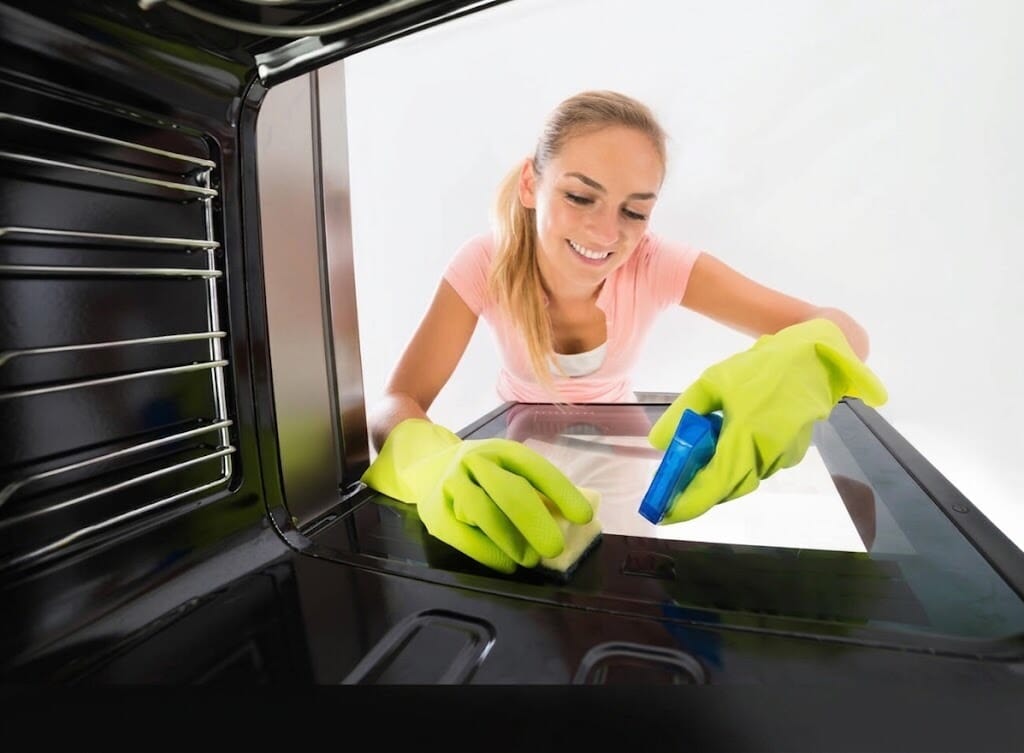
- ✓Inside oven: degrease (non-caustic), re-season the racks, clean the door glass
- ✓Behind & under the freestanding appliances (you'd be amazed what's under the fridge)
- ✓Extractor hood mesh: soak in hot degreaser, dry, refit
- ✓Top of wall units: degrease wipe-down
- ✓Splashback grout: enzyme cleaner, re-seal if needed
- ✓Plugholes: enzyme drain treatment (no bleach — it kills the good bacteria)
- ✓Kickboards: vacuum the dust, wipe the grease
- ✓Bin: full sanitisation (EN 14476), deodorise, dry
Why 6-8 weeks, not 12?
We ran a side-by-side trial in 2024 across 40 Glasgow kitchens. At 6 weeks, grease film wipes off in one pass with a microfibre cloth and food-safe degreaser. At 12 weeks, the same job takes three passes and a scrubbing pad. At 24 weeks, the grease has yellowed and started to etch painted surfaces — full restoration requires chemical stripper. The cost-per-clean is the same; the labour cost is 3x higher at 12 weeks and 8x higher at 24 weeks. Clean more often, pay less overall.
Bathroom — every 4 to 6 weeks
Bathrooms in Scotland have a harder life than bathrooms anywhere else in the UK. The combination of hard water (especially in Edinburgh and the Borders), high humidity, and inadequate extraction in older housing stock means limescale forms faster, mould spores germinate faster, and grout degrades faster. A 4-6 week deep clean cycle is the sweet spot.
- ✓Showerhead: descale (citric acid soak for eco, phosphoric for conventional)
- ✓Shower screen: limescale strip, hydrophobic coating reapply
- ✓Grout: enzyme cleaner, re-seal annually
- ✓Behind the toilet (yes, behind it) — sanitise
- ✓Toilet cistern: descale (often overlooked — affects flush performance)
- ✓Extractor fan: vacuum the dust, wipe the grease
- ✓Silicone sealant: inspect for mould, replace if degraded (don't just bleach it)
- ✓Wall tiles: descale, polish
The mould myth
Bleach does not kill mould. It bleaches the visible mycelium white, but the root structure (hyphae) survives in the silicone or grout and regrows within 2-3 weeks. The only way to permanently remove bathroom mould is to remove the affected silicone or grout and replace it. The only way to prevent it is to fix the ventilation. Bleach is a cosmetic intervention, not a remediation. We tell every client this on the first visit.
Bedrooms — every 12 weeks
Bedrooms accumulate dust, skin cells and fabric fibres rather than grease or limescale. The deep clean here is about air quality and allergen management — particularly important for asthma and eczema sufferers, which is a significant proportion of Scottish households. A 12-week cycle keeps dust mite populations in check and mattress allergen loading below the threshold that triggers symptoms in most adults.
- ✓Mattress: vacuum (HEPA), stain treat, UV sanitise, rotate head-to-foot
- ✓Under the bed: full vacuum (this is where dust mites thrive)
- ✓Wardrobe interiors: empty, wipe, deodorise, refold
- ✓Skirting boards & architraves: damp wipe
- ✓Light fittings & lampshades: dust (often missed)
- ✓Curtains: vacuum (HEPA), steam treat if washable
- ✓Behind radiators: radiator brush (massive dust trap)
Living room — every 12 weeks
Similar frequency to bedrooms, with the added complication of soft furnishings. Sofas, armchairs and rugs act as dust reservoirs — every time you sit down, you re-aerosolise the trapped dust. A 12-week deep clean that includes upholstery extraction and a proper rug beating dramatically reduces living-room dust levels. If you have pets, halve the frequency to 6 weeks.
- ✓Sofa & armchairs: HWE extraction (hot water extraction), stain treat, reapply fabric protector
- ✓Rugs: take outside, beat, vacuum both sides, edge-clean
- ✓Under sofas & armchairs (the void beneath is a dust bunny factory)
- ✓Skirtings & architraves: damp wipe
- ✓Light fittings & ceiling rose: dust
- ✓TV screen & AV equipment: electronics-safe wipe (never glass cleaner)
- ✓Books & shelves: dust (top-down, don't forget the top edge of the books)
Home office — every 8 weeks
Home offices are often the dustiest room in the house. Paper is a dust generator (every page you turn sheds microscopic cellulose fibres), printers and shredders are dust bombs, and the static charge on monitors and screens attracts dust from across the room. An 8-week cycle keeps the keyboard gunk at bay and the monitor streak-free — both of which affect your productivity more than you think.
- ✓Keyboard: compressed air, keycap pull, sanitise (keyboards carry 5x more bacteria than a toilet seat)
- ✓Monitor: electronics-safe wipe, microfibre buff
- ✓Printer & shredder: vacuum (do not blow — you'll spread the dust)
- ✓Desk surface: damp wipe, sanitise, dry
- ✓Cable run: dust (the cable spaghetti behind your desk is a dust trap)
- ✓Filing cabinet tops: dust
Hallway, stairs & landing — every 8 weeks
The transitional spaces in your home are the highest-traffic areas, which means they accumulate dirt faster than any other room. But they're also the easiest to deep clean — usually 30-45 minutes for a typical hallway and staircase. An 8-week cycle keeps the carpet pile upright, the paintwork fresh, and the bannister sanitised (the bannister is one of the most-touched surfaces in any home).
A realistic cleaning calendar
Here's the calendar we recommend to clients — based on 220 operative cleanings per day across 72 Scottish locations. Adjust the frequencies based on household size (more people = more frequent), pet ownership (halve the frequencies), and property type (tenements benefit from more frequent stairwell cleans).
| Room | Deep clean frequency | Time per clean |
|---|---|---|
| Kitchen | Every 6-8 weeks | 2-3 hours |
| Bathroom | Every 4-6 weeks | 1.5-2 hours |
| Bedrooms | Every 12 weeks | 1 hour per room |
| Living room | Every 12 weeks | 1.5 hours |
| Home office | Every 8 weeks | 1 hour |
| Hallway & stairs | Every 8 weeks | 45 mins |
| Whole house | Quarterly (every 13 weeks) | 5-7 hours total |
The single biggest mistake we see is households treating 'deep clean' as an annual event. By the time you notice the limescale on the showerhead, it's been there 6 months. A quarterly whole-house deep clean, supplemented by room-specific deep cleans on the rotation above, is what keeps a home genuinely clean — not just visually clean, but hygienically clean.
— Dr Fiona Reid, Head of Compliance & Training
If all this sounds like a lot of work, that's because it is. A full quarterly deep clean of a 3-bed home is 5-7 hours of physical labour — and that's with a two-person trained crew using commercial-grade equipment. Doing it solo, with domestic equipment, takes 2-3x longer. Which is why most of our residential clients book a recurring weekly or fortnightly plan (which keeps the surface clean) and add a quarterly deep clean on top. The combination is what delivers a genuinely clean home without you spending your weekends on it.